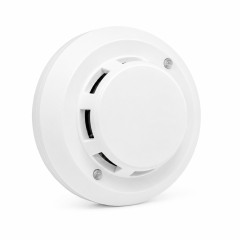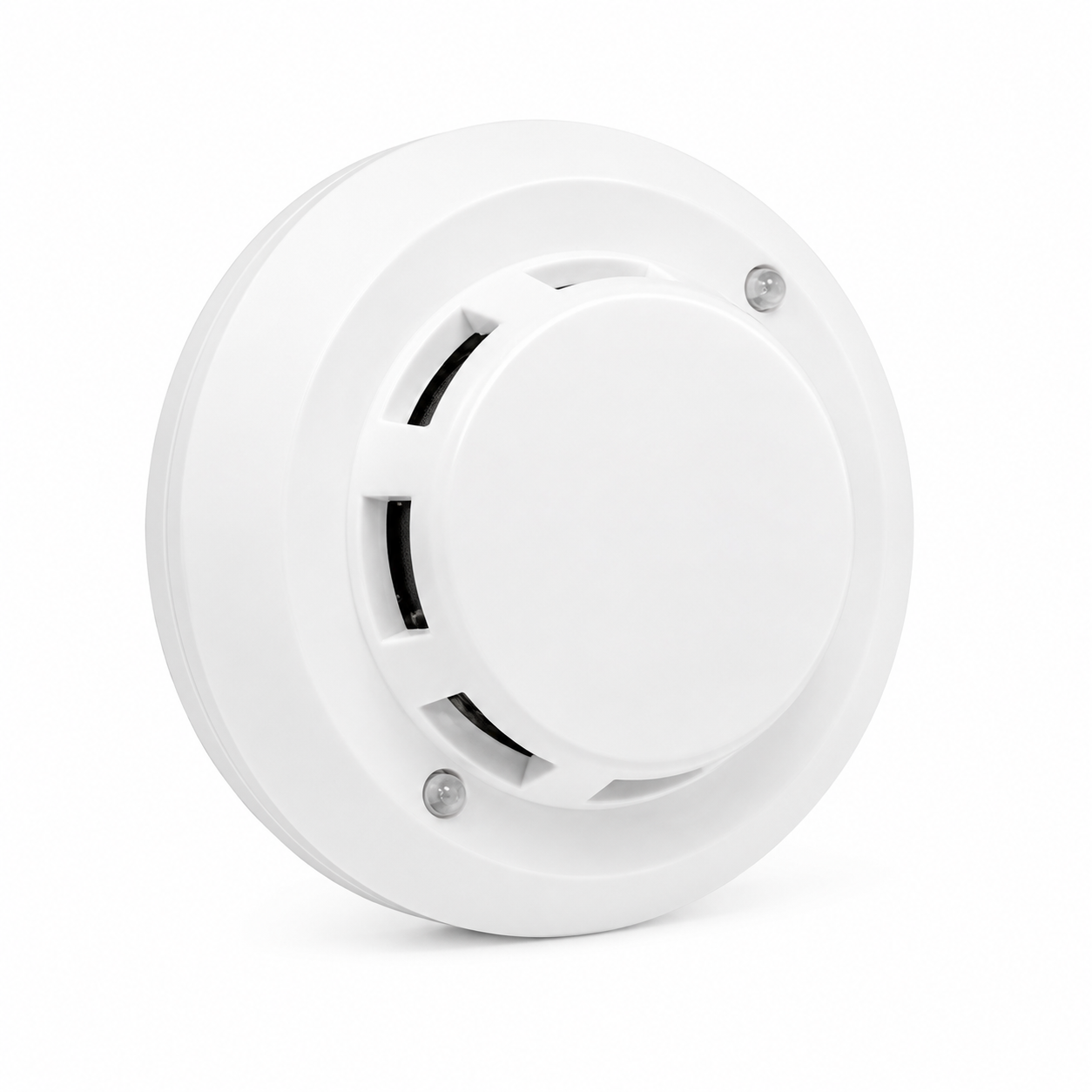
The ANWETECH AT-S238 Industrial Wide Temperature Smoke Detector is a photoelectric smoke detector designed for industrial equipment and demanding temperature environments.
Featuring a wide operating temperature range of -40°C to +85°C, DC 9–35V power supply, and selectable NO/NC relay alarm output, the AT-S238 provides smoke detection for electrical cabinets, transformer enclosures, substations, wind power installations, energy storage units, server rooms, and warehouses.
Its non-addressable design, infrared photoelectric sensing technology, and anti-interference features make it suitable for standalone smoke monitoring and integration with compatible monitoring systems.
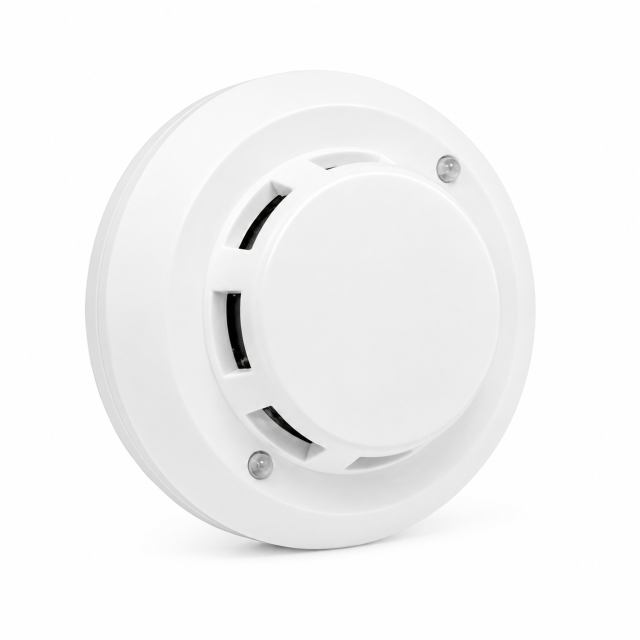
The ANWETECH AT-S238 is a non-addressable photoelectric smoke detector designed to detect visible smoke particles generated by smoldering and flaming fires.
The detector incorporates an infrared photoelectric sensor and microcontroller-based signal processing technology. Its construction includes protection against dust, insects, external light interference, and radio-frequency interference.
The detector operates from a DC 9–35V power supply and provides a configurable normally open or normally closed relay contact for alarm signal transmission.
During normal operation, the red LED indicator flashes. When smoke is detected and the alarm is activated, the indicator remains illuminated.
Power-off reset and automatic reset modes are selectable.
With an operating temperature range from -40°C to +85°C, the AT-S238 is designed for smoke monitoring in industrial electrical equipment and other suitable indoor installations.
Designed for industrial environments with low or high operating temperatures.
Supports operation from a DC power source within the specified voltage range.
Provides normally open or normally closed alarm contacts for connection to compatible external monitoring and control equipment.
Operates directly from a DC power supply without address programming.
Detects visible smoke generated by smoldering and flaming fires.
Incorporates intelligent signal processing and alarm control.
Features resistance to dust, insects, external light, and radio-frequency interference.
Supports power-off reset or automatic reset operation.
Provides red LED indication and audible alarm functionality.
Features a Ø104 × 53 mm housing with a dedicated mounting base.
| Parameter | Specification |
|---|---|
| Brand | ANWETECH |
| Model | AT-S238 |
| Product Type | Industrial Photoelectric Smoke Detector |
| Detection Principle | Infrared Photoelectric |
| Detector Type | Non-Addressable |
| Operating Voltage | DC 9–35V |
| Standby Current | 2mA at DC 24V |
| Alarm Current | 10mA at DC 24V |
| Operating Temperature | -40°C to +85°C |
| Relative Humidity | ≤95% RH, Non-Condensing |
| Smoke Sensitivity | 0.1–0.3 dB/m or 0.3–0.5 dB/m (Customizable) |
| Alarm Output | Normally Open / Normally Closed |
| Relay Contact Rating | 2A at AC 230V |
| Alarm Indicator | Red LED |
| Audible Alarm | ≥80dB/m (Customizable) |
| Reset Mode | Power-Off Reset / Automatic Reset |
| RF Interference Resistance | 10MHz–1GHz at 20V/m |
| Detector Dimensions | Ø104 × 53mm |
| Referenced Standard | GB 4715-2005 |
The AT-S238 uses infrared photoelectric technology to detect visible smoke particles.
The built-in microcontroller processes the detection signal and activates the alarm when smoke is detected.
The detector provides the following operating indications:
Normal monitoring: Red LED flashes.
Fire alarm: Red LED remains illuminated.
Alarm output: Relay contact changes state.
Alarm reset: Power-off reset or automatic reset, according to the selected configuration.
The detector uses a four-terminal mounting base.
| Terminal | Function |
|---|---|
| Terminal 1 | DC Positive (+) |
| Terminal 2 | DC Negative (-) |
| Terminal 3 | Relay Common (COM) |
| Terminal 4 | NO/NC Relay Contact |
The relay output configuration and alarm reset mode are selected using jumpers on the detector mounting base.
Select an appropriate ceiling mounting location.
Configure the required alarm output and reset mode.
Connect the DC power supply and relay signal wiring.
Secure the mounting base using screws.
Align the detector with the mounting base and rotate clockwise to secure it.
Installation Requirements:
Maintain at least 0.5m clearance from walls, beams, and nearby obstructions.
Maintain at least 1.5m horizontal distance from air-conditioning outlets.
Install the detector horizontally whenever possible.
If inclined installation is necessary, the angle must not exceed 45°.
Perform a simulated fire alarm test every six months.
Electrical Cabinets and Control Enclosures
Smoke monitoring for electrical equipment cabinets and enclosed industrial equipment.
Transformer Enclosures
Smoke detection for box-type transformer installations and associated equipment enclosures.
Electrical Substations
Smoke monitoring for suitable electrical equipment and indoor substation areas.
Wind Power Installations
Smoke monitoring for wind power equipment installations.
Energy Storage Units
Smoke detection for suitable energy storage equipment enclosures.
Server Rooms
Photoelectric smoke detection for server rooms and associated equipment areas.
Industrial Warehouses
Smoke monitoring for suitable indoor warehouse environments.