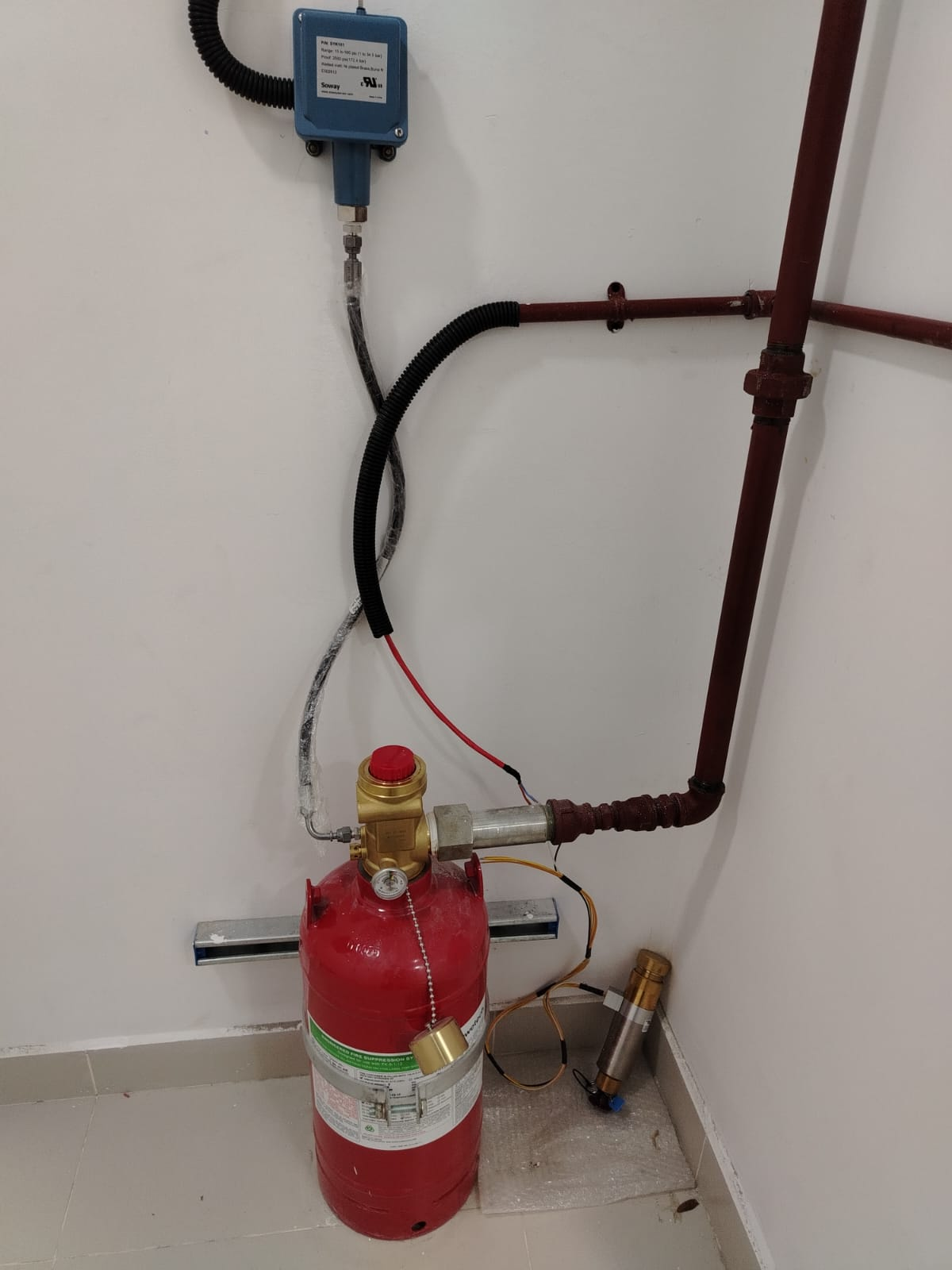
ANWETECH supplied one UL-listed FK-5-1-12 fire suppression system for a railway training center building in Sri Lanka.
Training facilities may contain electrical installations, control equipment, communication devices, computers, documentation, and other assets that could be damaged by fire, smoke, water, or extinguishing-agent residue. The selected clean-agent system provides fire protection without relying on water discharge inside the protected enclosure.
The project demonstrates how an FK-5-1-12 clean-agent fire suppression solution can be applied to railway-related buildings where equipment protection, operational continuity, and post-discharge cleanliness are important considerations.
| Item | Project Information |
|---|---|
| Project Type | Railway training center |
| Country | Sri Lanka |
| Building Application | Railway training facility |
| Fire Suppression Solution | FK-5-1-12 clean-agent fire suppression system |
| System Certification | UL-listed |
| System Quantity | One complete system |
| Customer Name | Confidential / not disclosed |
| System Supplier | ANWETECH |
A railway training center may include electrical and electronic equipment used for instruction, simulation, communication, administration, or operational training. Fire risks within such facilities can arise from electrical faults, overheating equipment, power supplies, cables, control devices, and other energized components.
The principal protection considerations for this type of building include:
Because the exact protected room and hazard details were not disclosed, the final system design must always be based on the confirmed enclosure volume, hazard classification, environmental conditions, room integrity, ventilation arrangement, and applicable project requirements.
The UL-listed FK-5-1-12 system was selected because clean-agent fire suppression is suitable for protected enclosures containing sensitive equipment and valuable assets.
FK-5-1-12 is a clean fire-extinguishing agent that does not leave powder, foam, or water residue after discharge. This helps reduce secondary damage and post-discharge cleanup requirements.
The system can be applied in enclosed areas where conventional water-based suppression could damage electrical equipment, control devices, computers, records, or other sensitive assets.
When designed as a total-flooding system, the extinguishing agent is discharged through the installed pipework and nozzles to establish the required extinguishing concentration throughout the protected enclosure.
An FK-5-1-12 cylinder system can provide centralized protection without requiring a large quantity of water-storage or drainage infrastructure inside the protected area.
The use of UL-listed equipment supports project requirements where internationally recognized product certification is an important part of technical evaluation and system acceptance.
The UL claim in this project article applies only to the confirmed listed system or components supplied for the project. It does not imply that every associated building device or the complete installation carries a separate UL certification.
The project adopted a total-flooding clean-agent protection concept. Under this arrangement, the FK-5-1-12 agent is stored in a pressurized cylinder and released into the protected enclosure when the confirmed fire-release sequence is activated.
The design concept includes the following functional stages:
The final operating sequence, alarm confirmation method, discharge delay, interface functions, and shutdown requirements must follow the approved cause-and-effect matrix and site-specific engineering documents.
The confirmed project configuration consists of:
| System Component | Confirmed Project Information |
|---|---|
| FK-5-1-12 Fire Suppression System | 1 complete system |
| Listing Status | UL-listed |
| Agent Storage Cylinder | Included as part of the system; capacity not disclosed |
| FK-5-1-12 Agent | Included; quantity not disclosed |
| Discharge Pipework | Project-specific arrangement |
| Discharge Nozzle | Quantity and size 1pcs DN20 |
| Actuation Arrangement | Project-specific configuration |
| Detection and Releasing Control | According to the approved project design |
| Alarm and Warning Devices | According to the approved project design |
| Manual Release and Abort Functions | According to the approved project requirements |
| Pressure and Discharge Monitoring | According to the selected system configuration |
No unconfirmed cylinder capacity, filling quantity, discharge pressure, nozzle quantity, room volume, detector quantity, control-panel model, or auxiliary-device quantity has been added to this case study.
The system installation and commissioning process focused on confirming that the supplied equipment was correctly installed and that the release functions matched the approved project design.
The principal activities included:
Any final discharge concentration and hydraulic performance must be verified using the approved system calculation and confirmed enclosure information. Room integrity and ventilation conditions should also be considered before the system is placed into service.
The project provided the railway training center with a clean-agent fire suppression solution designed to protect the selected enclosure without introducing water or extinguishing-agent residue.
The main project benefits include:
This installation also demonstrates ANWETECH’s ability to support clean-agent fire suppression projects for transportation infrastructure and institutional facilities in international markets.
UL-listed FK-5-1-12 fire suppression systems can be considered for applications such as:
Every application requires an individual hazard assessment and system calculation. Equipment certification, design concentration, enclosure integrity, local approval requirements, and system compatibility must be confirmed before final selection.
