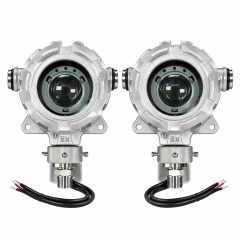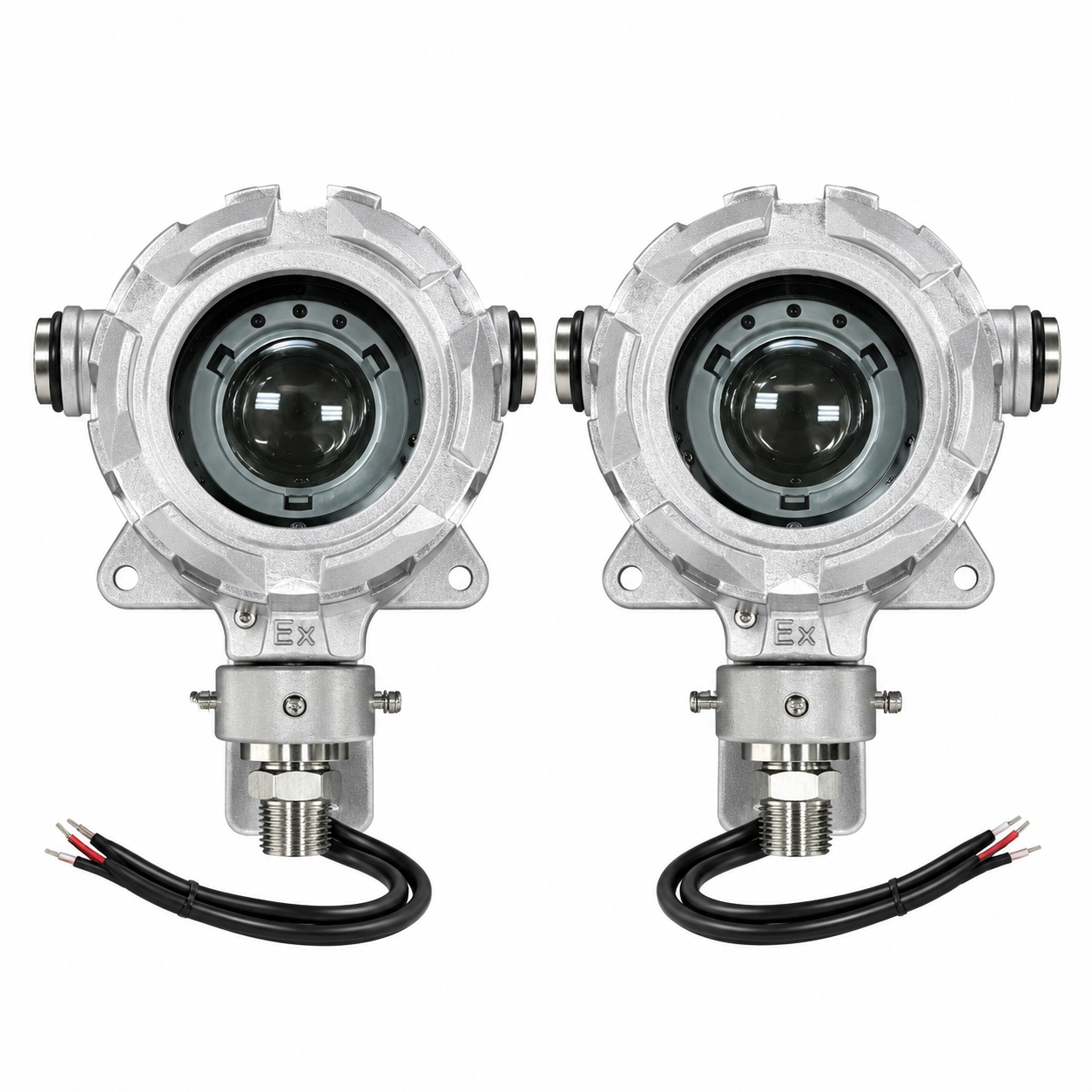
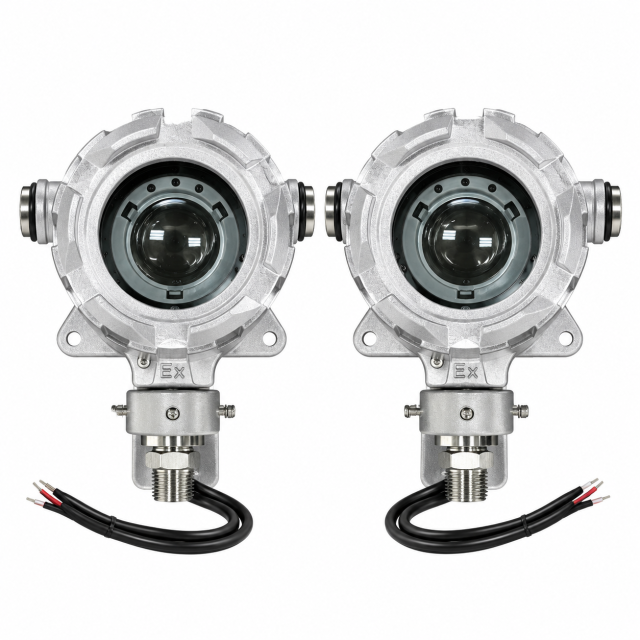
The AT-EB03 Ex Explosion-Proof Infrared Beam Smoke Detector is a linear optical smoke detection device designed with separate transmitter and receiver units.
The detector operates based on infrared beam attenuation technology. The transmitter emits an infrared beam, while the receiver continuously monitors the received infrared signal. When smoke enters the detection path and reduces the received infrared intensity to the alarm threshold, the detector activates the fire alarm output.
The transmitter and receiver design allows the detector to cover long detection distances, making it suitable for large open spaces where conventional point smoke detectors may not be suitable.
The detector includes automatic compensation functions and self-diagnostic features to improve operational reliability in different installation environments.
Optional configurations:
| Item | Specification |
|---|---|
| Model | AT-EB03 Ex |
| Detection Type | Infrared Beam Smoke Detection |
| Configuration | Transmitter and Receiver |
| Detection Distance | 2 m ~ 100 m |
| Sensitivity | 2-3 dB |
| Operating Voltage | DC24V |
| Transmitter Current | 18 mA |
| Receiver Current | 40 mA (Normal Monitoring), 55 mA (Fire Alarm) |
| Alarm Indicator | Red LED |
| Fault Indicator | Yellow LED |
| Operating Temperature | -20°C ~ +55°C |
| Relative Humidity | 0% ~ 93% RH |
| Weight | Transmitter: 2 kg / Receiver: 2 kg |
| Optical Alignment Deviation | 2° |
| Output Type | Relay Contact Output |
The AT-EB03 detects smoke through infrared beam attenuation.
During normal operation, the receiver continuously receives infrared signals from the transmitter. When smoke enters the optical path, the received infrared intensity decreases. The detector analyzes the signal change and generates an alarm output when the smoke attenuation reaches the configured threshold.
The receiver provides:
The detector can be connected with compatible fire alarm input modules through relay-type signal output.
The AT-EB03 should be installed with the transmitter and receiver facing each other to establish a stable infrared beam path.
Recommended installation conditions:
Installation methods:
The beam distance between transmitter and receiver should not exceed 100 m.
Typical applications include: